
Somewhere around hour twelve, I passed a law allowing children to work in the coal mines. Not because I wanted to. Because the temperature outside had dropped to minus seventy Celsius, seventeen people had died overnight, and the generator — the single source of heat keeping my frozen city alive — needed more fuel than my adult workforce could provide. I told myself it was temporary. It was not temporary.
Frostpunk, 11 bit studios' 2018 survival city-builder, has no shortage of moments like that. It is a game about the steady erosion of your principles under pressure, dressed up in gorgeous steampunk aesthetics and extremely punishing resource management. Six years on from its original release, with a sequel now out in the world, going back to the first game still hits the same way. That is either a compliment or a warning, depending on your constitution.
What Frostpunk Actually Is
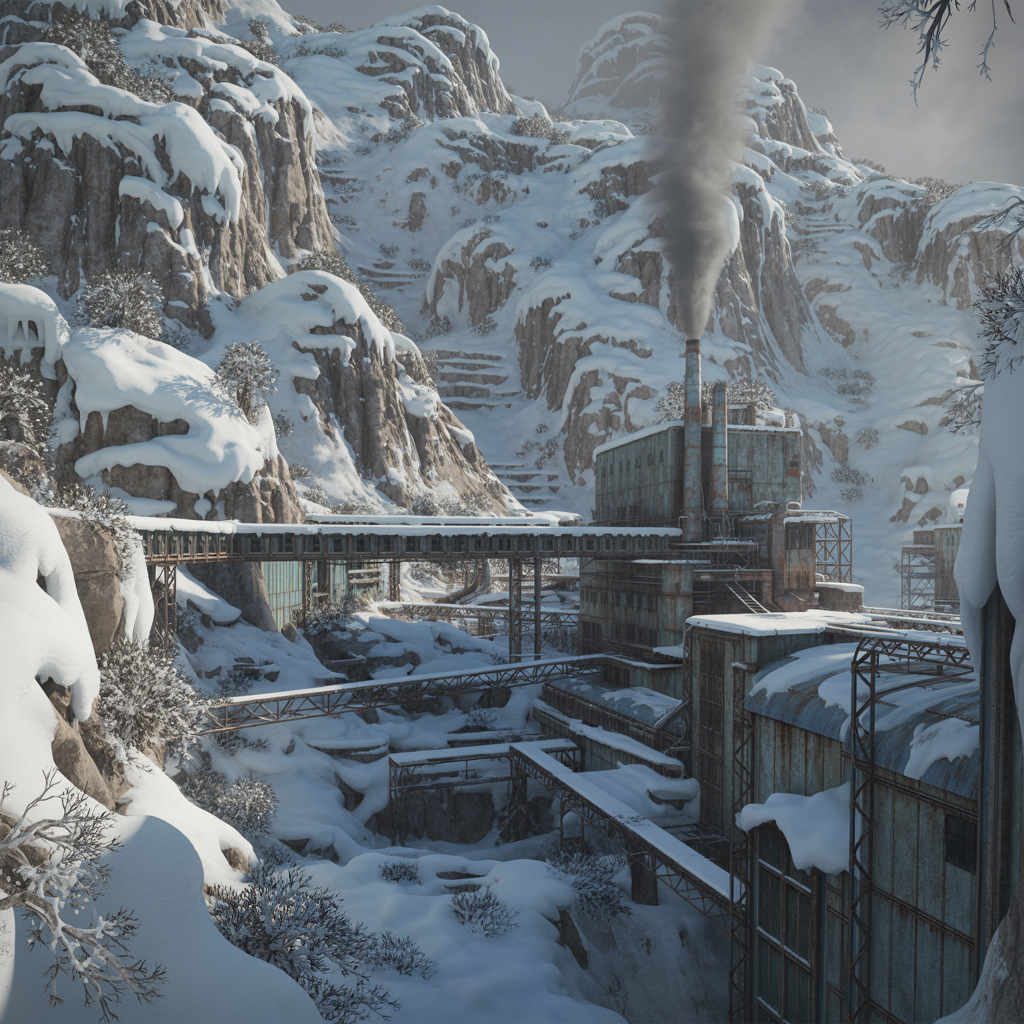
The setup is clean. An alternate-history 1886. A volcanic winter has killed most of civilization. You are the captain of a small survivor colony built around a massive coal-fired generator in a circular crater. You manage food, heat, shelter, medicine, and labor across a campaign that runs roughly eight to twelve hours depending on how badly you stumble. The city-building layer is more constrained than something like Anno 1800 — you are always building outward from the generator in concentric rings, fitting structures into a fixed radial grid. There is no free-form sprawl. The crater is the board, and the board is shrinking as the storm closes in.
What separates Frostpunk from most builders is the Book of Laws. As you accumulate hope and discontent among your population, you unlock legislation you can pass — extended work shifts, emergency shifts, sawdust in the soup to stretch rations, child labor, medical experimentation on the severely ill. Each law has cascading effects on your people's mood and your resource output. The system does not let you optimize cleanly. Every efficiency gain costs something human. That is the entire point.
The Pressure Dial Is Expertly Tuned
11 bit studios does something structurally clever that a lot of survival games fumble: the difficulty curve is not linear. It spikes, then briefly relents, then spikes harder. The first real cold snap in the main A New Home scenario hits around day six or seven, demanding more coal than your infrastructure can produce. You scramble, you over-extend your workforce, your discontent climbs. Then the temperature stabilizes for two days. You breathe. You start to recover. Then minus forty arrives, and you realize the brief reprieve was a trap — you spent your recovery time solving the wrong problem.
This rhythm of crisis and false recovery is what makes the game feel relentless without feeling unfair. You always had options. You just chose wrong, or you chose right but did not choose fast enough. The scouting system adds another layer — sending teams out into the frozen wastes to find survivors, resources, and lore fragments from other failed colonies. Those expeditions return on a timer, and their results land at exactly the worst moments. A group of three hundred survivors showing up when you cannot feed the people you already have is not a reward. It is a problem in disguise.
Where the Cracks Show
Frostpunk is not a long game by design. A New Home, the main scenario, is meant to be a single concentrated experience, not an infinitely replayable sandbox. Once you have played through it two or three times, the fixed scripting starts to show its seams. The Londoners arrive on day twelve. The temperature floor has a ceiling. The final storm's parameters do not change. On repeat playthroughs, the moral weight of each decision diminishes because you know the consequences in advance — you are no longer governing under uncertainty, you are executing a rehearsed strategy.
The additional scenarios — The Arks, The Refugees, On the Edge — add meaningful variety but cannot entirely resolve this. On the Edge in particular, which shifts focus toward managing multiple outposts and supply lines, feels structurally different enough to stay interesting longer. But none of the scenarios have the same punch as A New Home experienced cold, without prior knowledge. This is a game built around a specific kind of dread that only works once per campaign. That is a legitimate artistic choice. It also means the value proposition over forty-seven hours involves a lot of revisiting territory you have already emotionally processed.
The Morality Engine Has Real Teeth
Many games put moral choices in front of you and then quietly forgive them. Frostpunk does not. The Faithkeepers path and the Order path — the two authoritarian branches of the Book of Laws — both work as coherent governing philosophies, and both will take you somewhere uncomfortable if you follow them far enough. The Faithkeepers route ends with you constructing a theocracy. The Order route ends with you running a surveillance state. Neither game-ends you for it. The city survives. You just have to sit with what you built.
This is where Frostpunk earns its reputation. The mechanics are not just set dressing for a story about authoritarianism — they are the argument. You do not watch a cutscene about a character who became a tyrant. You make the individual decisions, each one defensible in isolation, that produce the tyrant. The gap between the person who sits down at hour one and the person still playing at hour eight is not cosmetic. Most city-builders let you be competent and benevolent simultaneously. Frostpunk makes you choose which one you actually are when the temperature drops.
Frostpunk 2 in the Room
Assessing the original game in late 2024 means acknowledging that Frostpunk 2 exists and does several things differently. The sequel scales up considerably — you are managing a city of tens of thousands rather than a few hundred, with a council-based political system replacing the single-captain authority structure. It is a more complex machine with more moving parts, and it trades some of the original's gut-punch intimacy for broader systemic depth. If you have only played the sequel, going back to the first game might feel comparatively small. That smallness is a feature.
The original's tight focus — one generator, one crater, one winter, you — keeps the emotional pressure concentrated in a way that the sequel's sprawl sometimes dissipates. Frostpunk 2's council debates are intellectually interesting. Frostpunk's Book of Laws is visceral. Both approaches are valid. They are solving for different things. But if someone has only ever played one of them, and that one is the sequel, they have missed the experience that justified the sequel's existence.
Who This Is For
If you have a tolerance for systems-heavy city management and no particular need for a relaxing experience, Frostpunk is still one of the better-designed survival games made this decade. The heat management mechanics, the overlapping resource dependencies, the way discontent and hope function as a second resource track you have to balance against coal and food — all of it is tightly constructed and largely free of the bloat that afflicts longer-form builders. It respects your time by being short. It disrespects your comfort by being honest.
Players who want emergent storytelling and a sandbox to tinker in indefinitely should look elsewhere — Dwarf Fortress and RimWorld are doing different and arguably richer things in that space. Players who want something that uses game mechanics to make an actual argument about governance, necessity, and the stories we tell ourselves while doing terrible things for good reasons: this is still one of the best examples of that in the medium. Forty-seven hours in, I passed the child labor law again. I knew I was going to. That is the game working exactly as intended.
Verdict
| Category | Score |
|---|---|
| Gameplay | 7/10 |
| Story | 9/10 |
| Visuals | 8/10 |
| Replayability | 6/10 |
Frequently asked questions
How long does it take to finish Frostpunk Made Me a Monster, and I'd Do It Again?
Main story runs around 18-25 hours depending on how thoroughly you explore. Completionists can spend 2-3× that.
Is Frostpunk Made Me a Monster, and I'd Do It Again good for newcomers to Survival City-builder?
Yes — Frostpunk Made Me a Monster, and I'd Do It Again is a great entry point. The early hours teach the systems gradually and the difficulty curve is reasonable.
Which platform should I play Frostpunk Made Me a Monster, and I'd Do It Again on?
Steam Deck handles this title well — verified compatibility on most recent patches.
Was Frostpunk Made Me a Monster, and I'd Do It Again worth the launch-day price?
If you're a fan of 11 bit studios, yes. If you're new to the studio, a sale price is more comfortable.
Are there DLCs or expansions worth picking up?
The base game is complete; expansion DLC adds 10-15 hours of additional content if you want more.
What did 11 bit studios get right (and what could be better)?
Strongest: art direction, audio design, set-piece variety. Weakest: late-game balance and a few persistent quest-log bugs.
Comments
Comments are moderated. Be civil — disagreement is fine, abuse isn't.
Solid piece, but I think there's a distinction worth making — the game is designed to funnel you toward those decisions. The resource curves are tuned specifically so that "wrong" choices become necessary ones. That's intentional and impressive, but it's also worth acknowledging that the monster-making is somewhat scripted. Doesn't make the feeling less real, just means the guilt is part of the product.
i tried it twice and both times my city just collapsed before any of the interesting moral stuff even kicked in. feels like the game only works if youre already good at it
The Endless mode will finish what the story campaign started. You WILL build a propaganda center. You WILL believe it was justified.
The children in the mines thing is the exact moment the game reveals what it actually is. You go in thinking it's a city builder with a grim aesthetic, and then you're sitting there genuinely arguing with yourself about labor exploitation as a survival tactic. What gets me is that the game doesn't punish you with a cutscene or a lecture — your people just... keep living. The furnaces stay hot. And somehow that's worse than any explicit condemnation would be. I've replayed the campaign four times and I still feel something shift in my chest when I pass that law. 11/10 psychological damage.