
Forty-seven hours in, I had a market square that looked genuinely medieval — timber-framed burgage plots climbing a hillside, a granary sitting fat near the river, ox-drawn carts threading between a tanner and a blacksmith while my villagers wore cloaks and argued over bread. Manor Lords, the debut release from solo developer Slavic Magic published by Hooded Horse, does something few city-builders bother to attempt: it makes the act of placing a building feel like it matters aesthetically, not just logistically. The game shipped into Steam Early Access in April 2024 and promptly broke pre-order records for the platform. That hype created a gap between what people wanted it to be and what it actually is. The gap is real. It does not make the game bad. But it is worth measuring precisely.
What Slavic Magic built is a medieval settlement sim wearing light grand-strategy clothes. You grow a village, manage supply chains, and occasionally push soldiers around a regional map to control territory. The bones are confident. The flesh, particularly past the first campaign scenario, starts to thin out. After those 47 hours across the sandbox and campaign modes, I have a clear sense of where the design is strong, where it is unfinished, and where it may simply be pointing at a more complete game that does not exist yet.
The Settlement Layer Is the Real Game
Manor Lords' settlement building is granular in ways that feel genuinely considered. The burgage plot system, where residents develop their own backyard extensions — a vegetable garden here, a chicken coop there — means your town fills out organically rather than snapping into a grid. You are not placing a 'Farm (Level 2)' tile; you are zoning a property and watching a family make decisions about it. The animations that accompany this are unhurried and specific. A man hauls timber. A woman hangs laundry. A child chases a goat. None of this is mechanical, exactly, but it does something important: it keeps you watching, and watching is half of what a city-builder sells.
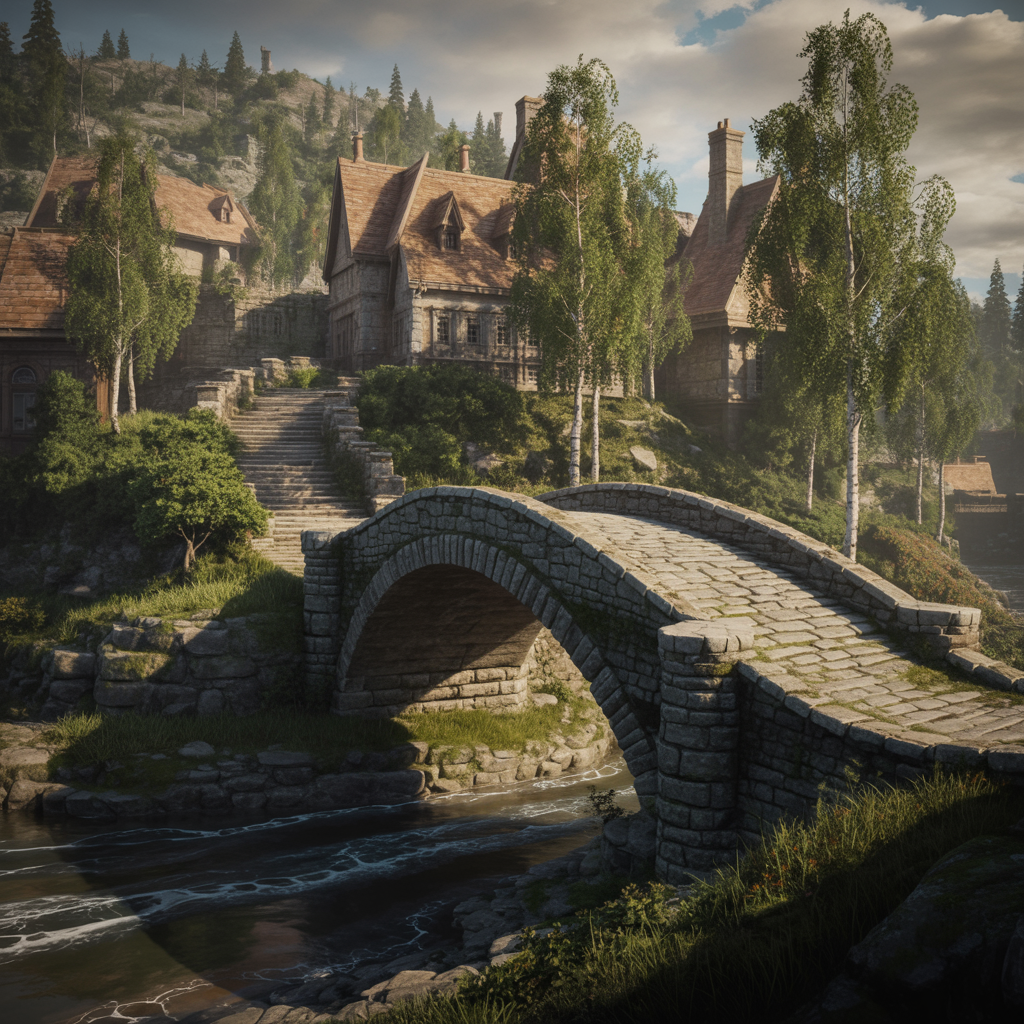
The supply chain design rewards genuine attention. Getting a leather shoe to a villager involves cattle, a slaughterhouse for hides, a tannery, a cobbler, and a market stall — and each step requires labour that you are constantly rationing. That chain will collapse if your settlement grows faster than your workforce can adapt, and Manor Lords does not hold your hand when it does. Compared to something like Anno 1800, where supply chains are elaborate but ultimately governed by consistent production ratios you can memorise, Manor Lords introduces seasonal variance and regional soil fertility that keep early-game decisions from feeling rote. It is less systematic than Anno and more readable than Dwarf Fortress. That is a reasonable place to sit.
The friction arrives when you want to issue precise instructions. Families can be assigned to specific plots, but labour pool management across multiple districts is vague in a frustrating way. You are directing the general flow of people rather than specific individuals, which matches the historical spirit but clashes with the moments when you need a particular chain fixed urgently. The UI conveys what is broken; it is less useful at explaining why.
The Regional Map Is an Unfinished Argument
Surrounding the settlement layer is a regional map where you claim territories, manage trade, and occasionally field an army. This is where Manor Lords' early access status becomes impossible to ignore. The bandit camp mechanics and the AI baronial opponents feel like stubs — functional enough to create a threat, thin enough that the threat rarely builds into anything that changes how you play. The AI baron will pressure you, trade with you, or go to war, but the decision tree driving that behaviour is shallow and readable within a few hours. By the time my second settlement was producing surplus armour, I had stopped thinking about him entirely.
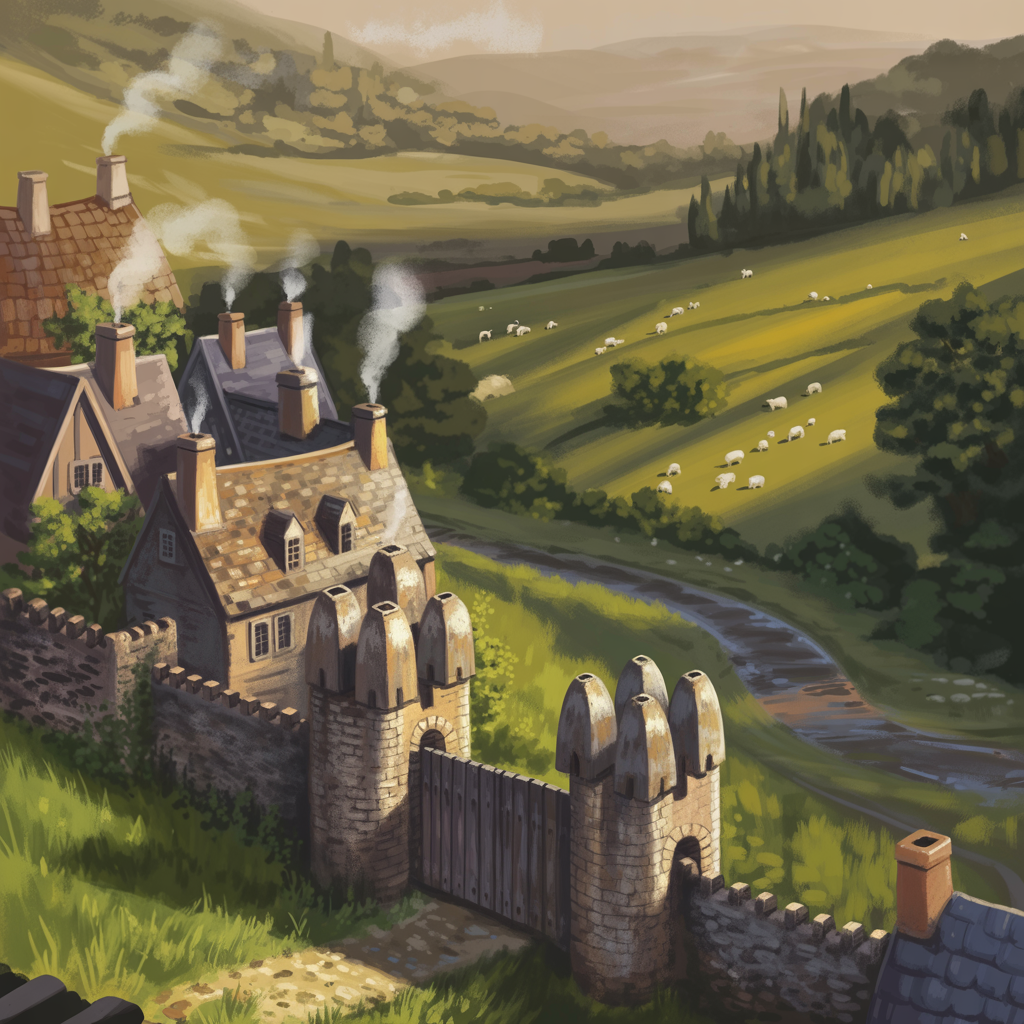
The battle system is worth a specific mention because the Steam page markets it, and it deserves accurate description. You position units on terrain, account for stamina, flanking, and morale, and watch things resolve. It is closer to a light tactics sim than a full battle engine — Norland or even the Total War series have more decision-making depth in their combat. What it does do is make a battle feel weighty when you lose one. Losing a retinue you spent an hour outfitting to a bandit raid because you misjudged the terrain genuinely stings. The feedback is effective even if the system is not deep.
Where 'Early Access' Stops Being a Disclaimer
Slavic Magic has been consistent and communicative in the months since launch. The roadmap includes expanded regional mechanics, richer trading systems, and further development of the campaign. That transparency matters. But 'it will improve' has become a structural crutch in the city-builder space, used to sell present-tense gaps as future-tense promises. Manor Lords at version 0.7.960 — which is where I spent most of my time — has a mid-game that plateaus hard. Once your settlement reaches a stable food surplus and your third-tier burgage plots are generating the church and manor the progression tree demands, the remaining tasks feel like maintenance rather than problem-solving.
That plateau is the most honest criticism I can make. Games like Farthest Frontier by Crate Entertainment or Against the Storm by Hooded Horse's own Eremite Games find ways to introduce new constraints as your settlement matures. Against the Storm in particular is engineered so that complacency is punished procedurally — the storm cycle ensures something is always pressing. Manor Lords' pressure model eases off rather than escalates. The bandits stop feeling dangerous. The seasons become routine. The trade system is interesting but not complex enough to replace that lost tension.
The Presentation Does Significant Work
It is worth stating plainly: Manor Lords is a beautiful game, and that beauty is functional rather than decorative. The low camera angle gives your settlement a ground-level solidity that overhead builders forfeit. The dynamic weather — fog rolling through your valley at dawn, snow settling on roof thatch — is not just cosmetic. It reinforces the seasonal rhythm that the food and fuel mechanics depend on. You feel winter coming. That emotional telegraph is doing real design work.
The audio reinforces it. There is no score in the conventional sense — ambient sound fills the gaps instead, and it is mixed carefully. A busy market district sounds different from a sleeping residential cluster at dusk. This kind of sensory layering is something Neocore Games reached for in Builders of Egypt without fully achieving. Slavic Magic gets there, and with a team of one directing it, that is notable.
What the Progression Tree Gets Right and Wrong
Manor Lords uses an Influence-based development system to unlock buildings and policies. Influence accrues through territory, approval, and church standing. The design intent is to make growth feel earned rather than automatic, and in the early game it works — you make real choices about whether to invest in market infrastructure or military readiness first. The policy options, things like determining how your citizens distribute surplus or how approval is maintained across scarcity events, give the settlement genuine character.
The problem is that the tree is short. Most players will see its full shape within 20 hours, and replay variety depends on which branches you prioritise rather than different trees entirely. The scenarios in the campaign add constraints — a hostile starting region, different baron behaviours — but these feel like difficulty modifiers more than structural reframes. For a city-builder hoping to sustain a player base through Early Access, this is the design problem that needs solving most urgently. More policies, more development branches, or a harder mechanical ceiling to approach would all help.
Where It Lands
Manor Lords is a genuinely impressive first commercial release from a solo developer, and it earns that description without requiring you to adjust the grading scale. The settlement simulation is specific, tactile, and visually coherent in ways that dedicated studio teams often miss. The early hours are among the most satisfying I have spent in the genre since Lethis – Path of Progress was quietly doing interesting things with Roman-era city design back in 2015.
But the game asks you to invest significant time in a system that currently runs out of questions to ask you before the map runs out of space. The regional strategy needs a complete rethink to match the settlement layer's quality. The mid-game needs new sources of pressure that compound rather than dissolve. Slavic Magic has stated these are priorities. Right now, Manor Lords is the architectural sketch of something excellent — detailed in the foreground, blank at the edges. Whether the full canvas gets painted depends entirely on what the Early Access development cycle produces. The foundation deserves it.
Verdict
| Category | Score |
|---|---|
| Gameplay | 8/10 |
| Story | 5/10 |
| Visuals | 7/10 |
| Replayability | 6/10 |
Frequently asked questions
How long does it take to finish Manor Lords Builds Beauty, Then Lets It Quietly Rot?
Main story runs around 50-60 hours depending on how thoroughly you explore. Completionists can spend 2-3× that.
Is Manor Lords Builds Beauty, Then Lets It Quietly Rot good for newcomers to City-Builder?
For total newcomers, expect a 5-8 hour ramp-up. Once you internalize the loop, it clicks.
Which platform should I play Manor Lords Builds Beauty, Then Lets It Quietly Rot on?
Console version is the most stable on launch. PC version benefits from the modding scene long-term.
Was Manor Lords Builds Beauty, Then Lets It Quietly Rot worth the launch-day price?
Released in 2024, and as of writing it holds up. Wait for a sale if you're price-sensitive — major discounts arrive within 6 months.
Are there DLCs or expansions worth picking up?
Skip the cosmetic DLC. The story expansion is the only one we'd recommend at full price.
What did Slavic Magic get right (and what could be better)?
Slavic Magic nailed the moment-to-moment loop and the world-building. Pacing in the mid-game and inventory UX have room for improvement.
Comments
Comments are moderated. Be civil — disagreement is fine, abuse isn't.
the part about the cloaks and bread arguments is exactly why I haven't uninstalled it despite not really knowing what I'm doing
Worth keeping in mind that Slavic Magic has been pretty transparent on the roadmap — the economic depth issues are acknowledged and there's content coming that's supposed to add more late-game friction. Reviewing early access as a finished product always gets messy. That said, nothing in the roadmap changes what the game is right now, so the critique stands on its own terms.
The 'rot' framing is accurate but I'd push back on the implication that it's purely a flaw. Every city builder that's ever mattered — Tropico, the old Impressions games, Banished — eventually enters a maintenance phase where you're just watching the machine run. Manor Lords does hit that wall faster than most, but the machine it builds is prettier than anything in the genre. My issue is less with the pacing and more with how abruptly the economy stops presenting you with genuine decisions. Around the point your second burgage tier stabilizes, there's just... nothing left to solve. You're clicking around hoping something breaks.
Calling it 'quietly rot' is a little dramatic for what is essentially an early access title with documented missing systems. The article is good but it's critiquing a gap where content hasn't shipped yet, not a design philosophy. The combat layer in particular is clearly unfinished — the AI for bandit raids feels placeholder-level, and that directly affects how long the tension loop stays interesting. If Slavic Magic delivers on even half the stated plans for the military and trade systems, this write-up is going to read as a snapshot of a rough patch rather than a structural diagnosis. I don't think the author is wrong, I just think the framing buries the lede about what kind of product this actually is.
came into this expecting stardew vibes from the screenshots and got something way more demanding. genuinely had no idea sheep mattered this much to a medieval economy
oxcart pathfinding is still broken on slopes btw, that kills the immersion for me more than any pacing issue